 Animal Sounds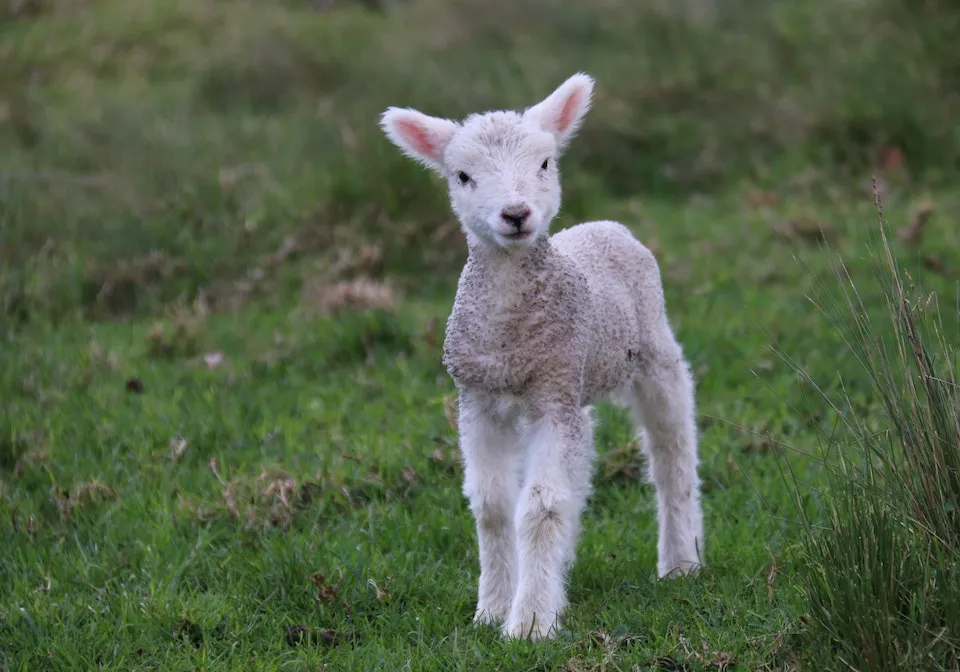
💡 Did you know: Lambs can recognize their mothers by their bleats alone.
Lamb Sounds
- Sound
- Bleat ("baa")
- Habitat
- Farms & pastures
- Diet
- Milk, then grass
- Region
- Farms worldwide
- Lifespan
- 10–12 years
- Size
- Baby (4–7 kg at birth)
What sound does a lamb make?
Lambs bleat 'baa' in high, wobbly little voices, calling their mothers dozens of times a day. Within hours of birth, a ewe learns her lamb's unique voice — and in a field of a hundred bleating lambs, she can pick out her own baby every time.
Lambs are famous for their happy play: in the evening they sprint, leap, and bounce in groups, bleating with excitement. A hungry lamb's bleat is short and urgent; a lost lamb's bleat is long and loud until mom baas back.
About the Lamb
A lamb is a young sheep, typically less than one year old. These woolly animals are known for their gentle nature and playful behavior. Lambs are born with the ability to stand and walk within minutes, an adaptation that helps them avoid predators. They rely on their mother's milk for the first few months of life before transitioning to grass and other vegetation. Lambs are social animals and often engage in playful activities like running, jumping, and head-butting, which help develop their strength and coordination. The wool of lambs is particularly soft and valuable. In many cultures, lambs symbolize innocence and purity.
Lamb questions
What sound does a lamb make?
Lambs bleat — a high, wobbly 'baa' — to call their mothers, who recognize their own lamb's voice among the whole flock.
Why do lambs jump around so much?
That bouncing play — called gambolling — builds strong muscles and coordination, and it's most common in the evening when lambs get the 'zoomies'.
Related animals
More: Baby Animals · Farm Animals


Hear 250+ more animals in the app
Love the lamb? The Animal Sounds app has over 250 wildlife sounds, photos, and four learning games — rated 4.3★ by 1,600+ families.
Free download · iPhone, iPad & Mac