 Animal Sounds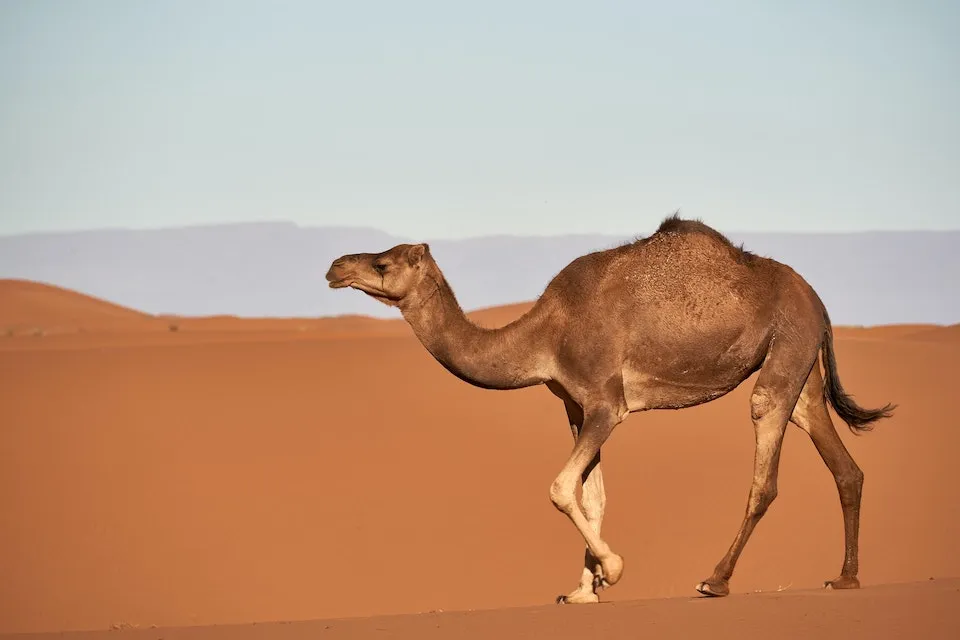
💡 Did you know: A camel's hump doesn't store water, but fat that can be converted to energy and water.
Arabian Camel Sounds
- Sound
- Grunt & groan
- Habitat
- Deserts
- Diet
- Herbivore (thorny plants)
- Region
- Middle East & North Africa
- Lifespan
- 40–50 years
- Size
- Very large (300–600 kg)
What sound does a arabian camel make?
Arabian camels grunt, groan, moan, and bellow — especially when standing up, sitting down, or being loaded for a journey. The deep rumbling groan of a camel is one of the classic sounds of the desert.
Male camels also make a strange gurgling, rumbling sound during breeding season, sometimes inflating a soft throat sac called a dulla. Interestingly, the roar of the character Chewbacca in Star Wars was partly created from camel sounds!
About the Arabian Camel
The Arabian camel, also known as the dromedary, is a large, single-humped ungulate native to the desert regions of the Middle East and North Africa. These 'ships of the desert' are perfectly adapted to their harsh environment, with wide, padded feet for walking on sand and the ability to go for long periods without water. Camels can drink up to 30 gallons of water in just 13 minutes when it's available. Their long eyelashes, closable nostrils, and thick fur protect them from blowing sand and extreme temperatures.
Arabian Camel questions
What sound does a camel make?
Camels grunt, groan, bellow, and rumble — especially when getting up, lying down, or carrying loads. Males make a deep gurgling rumble in breeding season.
Do camels really store water in their humps?
No — the hump stores fat, not water. That fat is an energy reserve that lets camels travel for days across the desert without eating.
Related animals
More: African Animals · Farm Animals · Wild Animals · Zoo Animals


Hear 250+ more animals in the app
Love the arabian camel? The Animal Sounds app has over 250 wildlife sounds, photos, and four learning games — rated 4.3★ by 1,600+ families.
Free download · iPhone, iPad & Mac